

When newcomers arrive in Canada, they bring resilience, skills, and a desire to build a better future. But without stable housing, that future becomes much harder to achieve.
Housing is more than a place to live. It is the foundation that makes everything else possible.
At the London Cross Cultural Learner Centre (CCLC), we see this every day. Without stable housing, it becomes harder to secure employment, enroll children in school, access healthcare, and build meaningful connections in the community.
Without stability at home, it is difficult to focus on building a life.
Housing and Settlement Are Deeply Connected
Settlement is not a single moment, it is a process built on stability.
When housing is secure:
Individuals are better able to pursue employment
Children can succeed in school
Families can focus on language learning
Overall well-being improves
Without it, many newcomers are forced into cycles of uncertainty. Moving between temporary or unaffordable housing, limiting their ability to move forward.
The Growing Need in Our Community
In London, like many communities across Canada, the demand for affordable housing continues to grow.
Immigrants make up approximately 25% of London’s population and are a critical part of the local workforce and economy. They also arrive highly educated. In Canada, over 55% of recent immigrants hold a bachelor’s degree or higher, compared to significantly lower rates among the Canadian-born population.
Despite this, many newcomers are unable to work in their fields.
In 2021, only 44% of recent immigrants were employed in jobs that matched their education, compared to 64% of Canadian-born workers.
More than 1 in 4 immigrants with a university degree were working in jobs requiring only a high school education or less.
This is not a talent issue, it is a systems issue. Barriers such as credential recognition, lack of Canadian experience, and language challenges prevent many skilled newcomers from entering their professions.
At the same time, the cost of housing continues to rise.
In London, the average rent for a two-bedroom apartment is approximately $1,800–$2,000 per month. For many newly arrived families, this represents the majority of their income, leaving little to no room for savings, education, or career advancement.
As a result, newcomers are often forced to prioritize immediate income over long-term opportunity. Instead of improving their English, pursuing credential recognition, or re-entering their professions, many take the first available job to cover the cost of rent. This creates a ripple effect across the entire community.
Highly skilled individuals are underemployed, their education and experience under-utilized. Over time, this leads to “brain waste” — where talent exists, but is not fully realized.
A Different Approach to Housing
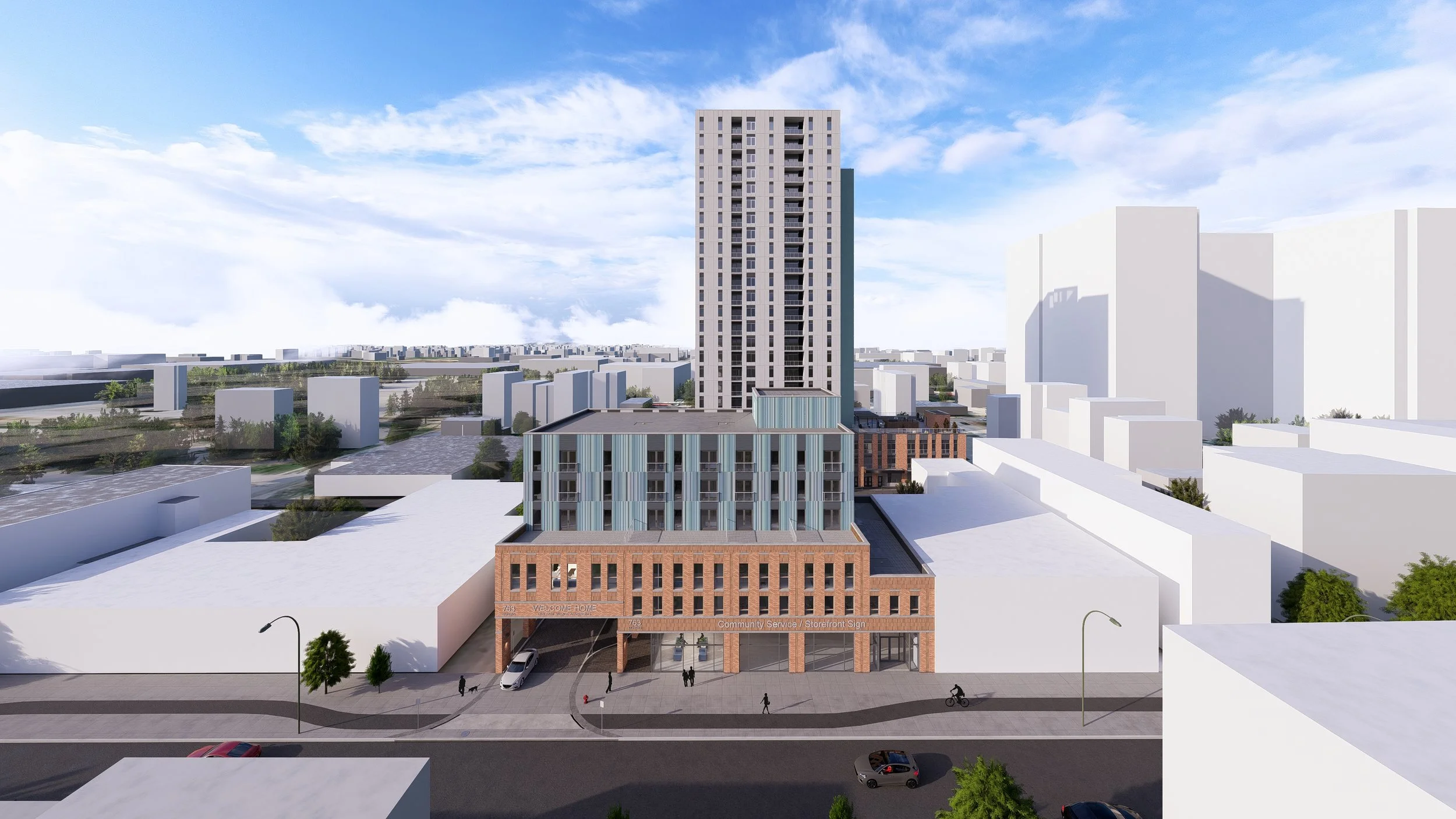
Projects like Doorways to Dreams are rooted in a simple idea: housing should be safe, stable, and accessible.
By creating a mixed-use, mixed-income, and inclusive housing model, we are not only increasing the supply of affordable housing, we are creating the conditions for people to succeed.
This approach recognizes that successful settlement is not just about access to services. It is about stability, belonging, and opportunity.
Building the Foundation for the Future
When newcomers have access to stable and affordable housing, the trajectory changes.
Instead of focusing only on immediate financial survival, individuals and families can invest in their future. Improving their language skills, pursuing education, and working toward careers aligned with their experience.
Housing is not just a starting point, it is the foundation for long-term success. The result is not only better outcomes for newcomers, but stronger communities. When people are able to contribute fully, the entire city benefits.
By investing in stable, affordable housing, we are investing in people, in potential, and in the future of our community.